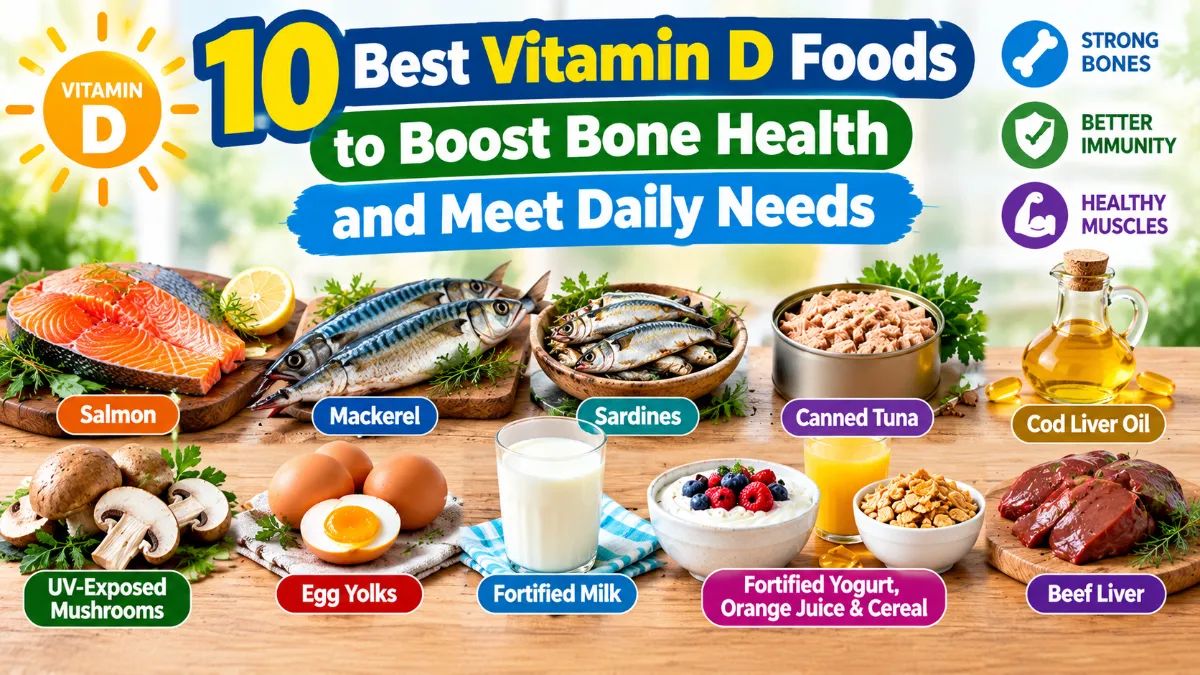
10 Foods High in Vitamin D : Vitamin D is one of the most important nutrients for maintaining strong bones, healthy muscles, and normal immune function. Yet many people don’t get enough of this essential vitamin through their daily diet.
Unlike most vitamins, vitamin D can be produced by your body when your skin is exposed to sunlight. However, factors such as age, skin tone, season, geographic location, and time spent indoors can affect how much vitamin D your body makes.
The good news is that several everyday foods can help you increase your vitamin D intake. From fatty fish and eggs to fortified milk and UV-exposed mushrooms, there are options for different tastes and dietary preferences.
In this guide, we’ll explore 10 vitamin D-rich foods, how much they typically provide, and simple ways to include them in your meals.
How Much Vitamin D Do You Need Every Day?
According to U.S. nutrition recommendations, most adults ages 19–70 need 600 international units (IU), or 15 micrograms, of vitamin D daily. Adults older than 70 generally need 800 IU, or 20 micrograms, per day.
Vitamin D helps your body absorb calcium, which is essential for maintaining strong bones and teeth. It also supports normal muscle function and the immune system.
Here are 10 foods that can help you meet your daily needs.
1. Salmon
Salmon is one of the best natural food sources of vitamin D. It also provides high-quality protein and omega-3 fatty acids, making it a nutritious choice for a balanced diet.
The amount of vitamin D varies depending on the species, whether the fish is wild-caught or farm-raised, and the preparation method.
A 3.5-ounce (100-gram) serving of cooked salmon can provide several hundred IU of vitamin D, with some varieties supplying a substantial portion of an adult’s daily requirement.
Why it’s healthy:
- Supports calcium absorption and bone health.
- Provides protein for muscle maintenance.
- Supplies omega-3 fats that support normal heart and cellular health.
How to eat it: Bake salmon with lemon and herbs, grill it for dinner, or add cooked salmon to a salad.
2. Mackerel
Mackerel is another excellent fatty fish that can provide significant amounts of vitamin D. It also contains omega-3 fatty acids and protein.
The exact vitamin D content depends on the species, but certain varieties are particularly rich in this nutrient.
Why it’s healthy:
- Helps contribute to daily vitamin D intake.
- Provides nutrients that support bone and muscle function.
- Supplies beneficial omega-3 fatty acids.
How to eat it: Grill mackerel with vegetables, bake it with herbs, or serve it with brown rice.
Tip: Choose seafood varieties appropriate for your health needs. Some types of mackerel, particularly king mackerel, contain high mercury levels and should be avoided by people who are pregnant or may become pregnant.
3. Sardines
Sardines are small, oily fish that offer several valuable nutrients, including vitamin D, protein, and omega-3 fatty acids.
Canned sardines are especially convenient because they’re affordable, widely available, and ready to eat. Sardines with edible bones also provide calcium.
Why they’re healthy:
- Contribute vitamin D to your diet.
- Provide calcium when the soft bones are eaten.
- Supply protein and omega-3 fats.
How to eat them: Add sardines to whole-grain toast, mix them into salads, or serve them with roasted vegetables.
For people who enjoy seafood, sardines are an easy way to add more nutrient-rich foods to weekly meals.
4. Canned Tuna
Canned tuna is a convenient pantry staple that provides protein and some vitamin D. It’s easy to use in sandwiches, salads, and quick lunches.
Although tuna generally contains less vitamin D than some fatty fish, it can still contribute to your daily intake.
Why it’s healthy:
- Provides protein to help maintain muscle.
- Contributes vitamin D.
- Offers a convenient option for quick meals.
How to eat it: Mix canned tuna with plain Greek yogurt or a little olive oil, then serve it on whole-grain bread or over a green salad.
Important tip: Vary your seafood choices because mercury levels differ between tuna species. Canned light tuna generally contains less mercury than albacore tuna.
5. Cod Liver Oil
Cod liver oil is a concentrated source of vitamin D. Unlike ordinary fish oil, it also naturally contains vitamin A.
A tablespoon can provide a substantial amount of vitamin D, although the exact quantity varies by product.
Because cod liver oil is concentrated, it’s important to read the label carefully. Taking too much can result in excessive vitamin A or vitamin D intake.
Why it’s notable:
- Provides vitamin D in a concentrated form.
- Contains omega-3 fatty acids.
- Also supplies vitamin A, which supports normal vision and immune function.
How to use it: If you are considering cod liver oil, discuss the appropriate dose with a healthcare professional, especially if you take other supplements or medications.
Cod liver oil is not necessary for everyone, and ordinary food sources may be a better starting point.
6. UV-Exposed Mushrooms
Mushrooms are an especially useful option for people who prefer plant-based foods. When exposed to ultraviolet (UV) light, certain mushrooms can produce vitamin D2.
However, ordinary mushrooms that haven’t received UV exposure may contain very little vitamin D. Check the product label to confirm whether the mushrooms are specifically identified as vitamin D-enhanced or UV-exposed.
Why they’re healthy:
- Provide vitamin D2 when appropriately UV-exposed.
- Offer fiber and other nutrients.
- Add variety to vegetarian and plant-forward meals.
How to eat them: Sauté mushrooms with garlic, add them to omelets, or roast them with vegetables.
UV-exposed mushrooms can be a helpful dietary option, although their vitamin D content varies considerably by product.
7. Egg Yolks
Egg yolks contain small amounts of vitamin D, making whole eggs a convenient addition to a balanced diet.
The amount varies depending on factors such as the hens’ feed and farming conditions. Eggs are not as concentrated a source as fatty fish, but they can still contribute to overall intake.
Why they’re healthy:
- Provide a modest amount of vitamin D.
- Supply protein when eaten as whole eggs.
- Contain other nutrients, including vitamin B12 and choline.
How to eat them: Enjoy boiled eggs for breakfast, make a vegetable omelet, or add a hard-boiled egg to a salad.
For most healthy adults, eggs can fit into a balanced eating pattern. Individual dietary needs may differ based on medical conditions and overall food choices.
8. Fortified Milk
In the United States, cow’s milk is commonly fortified with vitamin D. This makes it one of the most accessible everyday sources of the nutrient.
One cup of fortified milk typically provides around 100–120 IU, although the amount can vary by brand.
Milk also supplies calcium and protein, which work together with vitamin D to support bone health.
Why it’s healthy:
- Helps increase vitamin D intake.
- Provides calcium for bones and teeth.
- Supplies protein for muscle maintenance.
How to use it: Drink a glass with breakfast, add it to oatmeal, or use it in smoothies.
If you avoid dairy, look for fortified soy milk or another plant-based beverage with vitamin D and calcium. Check the Nutrition Facts label because not every product is fortified.
9. Fortified Yogurt, Orange Juice, and Breakfast Cereal
Some manufacturers add vitamin D to yogurt, orange juice, and breakfast cereal. These products can help people increase their intake without making major changes to their eating habits.
However, fortification varies by product, and not every yogurt, juice, or cereal contains added vitamin D.
Why they’re useful:
- Provide convenient options for breakfast and snacks.
- Can help supplement vitamin D from other foods.
- Some products provide additional nutrients, such as calcium and fiber.
How to eat them: Choose fortified cereal with fortified milk, enjoy yogurt with fruit, or drink a small serving of fortified orange juice.
Shopping tip: Check the Nutrition Facts label for vitamin D per serving and compare added sugar levels, especially in flavored yogurt, sweetened cereal, and juice.
10. Beef Liver
Beef liver contains a modest amount of vitamin D along with several other nutrients, including iron, vitamin B12, and vitamin A.
It is not one of the richest sources of vitamin D, so it should not be your primary food choice for meeting your daily requirement.
Why it’s nutritious:
- Provides vitamin B12 and iron.
- Supplies protein.
- Contributes a small amount of vitamin D.
How to eat it: If you enjoy liver, include it occasionally as part of a varied diet.
Beef liver is very high in preformed vitamin A, so it should be limited during pregnancy and avoided when advised by a healthcare professional.
Vitamin D Content: A Quick Comparison
The following values are approximate. Actual amounts depend on food variety, serving size, preparation, and product fortification.
| Food | Typical serving | Approximate vitamin D |
|---|---|---|
| Cod liver oil | 1 tablespoon | Varies; can exceed 1,000 IU |
| Salmon | 3.5 ounces | Several hundred IU |
| Mackerel | 3.5 ounces | Varies by species |
| UV-exposed mushrooms | 3.5 ounces | Varies widely |
| Canned tuna | 3 ounces | Around 150 IU in some products |
| Fortified milk | 1 cup | Around 100–120 IU |
| Fortified yogurt | 6 ounces | Check product label |
| Fortified orange juice | 1 cup | Check product label |
| Egg yolk | 1 large yolk | A few dozen IU |
| Beef liver | 3.5 ounces | A modest amount |
These figures are intended as general guidance rather than exact nutritional values for every product.
Can You Get Enough Vitamin D From Food Alone?
For many people, meeting the recommended vitamin D intake through food alone can be challenging. Fatty fish, fortified milk, UV-exposed mushrooms, and other fortified foods can help, but the amount you obtain depends on what you eat and how frequently you eat it.
Sunlight also contributes to vitamin D production. However, the amount your skin produces varies with skin tone, age, season, latitude, clothing, sunscreen use, and other factors. Sun exposure also carries risks, including skin cancer, so deliberately exposing your skin without protection is not a universally safe solution.
If you are concerned about vitamin D deficiency, ask your healthcare professional whether testing is appropriate. Supplements may be useful for certain people, but taking high doses without medical guidance can be harmful.
For adults, the usual tolerable upper intake level is 4,000 IU (100 micrograms) per day from all sources unless a healthcare professional recommends otherwise. This is a safety limit, not a daily target.
Simple Ways to Add More Vitamin D to Your Diet
You don’t need to overhaul your diet to make progress. A few practical changes can help:
- Eat salmon, sardines, or another suitable fatty fish regularly.
- Choose milk or plant-based beverages fortified with vitamin D.
- Include eggs in meals if they fit your dietary preferences.
- Look for UV-exposed mushrooms at the grocery store.
- Check labels on fortified yogurt, cereal, and orange juice.
- Ask a healthcare professional before starting high-dose vitamin D supplements.
Consistency and variety are more useful than relying on one food alone.
Frequently Asked Questions
1. What is the best food source of vitamin D?
Fatty fish such as salmon and certain types of mackerel are among the best natural food sources. Cod liver oil is highly concentrated but requires care because it also contains vitamin A.
2. Which vitamin D-rich foods are suitable for vegetarians?
UV-exposed mushrooms and foods fortified with vitamin D, such as some plant-based milks, yogurts, and breakfast cereals, can help. Eggs also provide vitamin D for people who include them in their diet.
3. Does vitamin D help strengthen bones?
Yes. Vitamin D helps the body absorb calcium, which is essential for maintaining healthy bones. Adequate vitamin D is important alongside calcium, protein, physical activity, and other healthy habits.
4. Can you take too much vitamin D?
Yes. Excessive vitamin D, usually from high-dose supplements, can cause calcium to build up in the blood and lead to serious health problems. Follow professional guidance when using supplements.
5. Should everyone take a vitamin D supplement?
No. Whether you need a supplement depends on your diet, age, health conditions, risk factors, and individual circumstances. Ask your healthcare professional for advice rather than assuming that everyone needs the same dose.
Final Thoughts
Vitamin D plays an essential role in bone health, muscle function, and overall wellness. Including salmon, mackerel, sardines, eggs, fortified milk, UV-exposed mushrooms, and other vitamin D-containing foods can help you build a more nutritious diet.
Start with simple changes, such as choosing fortified milk, adding fish to your weekly menu, or checking labels on everyday foods.
Remember that vitamin D needs vary from person to person. A balanced diet, sensible sun protection, and personalized medical advice can help you make informed decisions about maintaining healthy vitamin D levels.
Medical disclaimer: This article is for educational purposes only and should not replace professional medical advice, diagnosis, or treatment.
Read More