
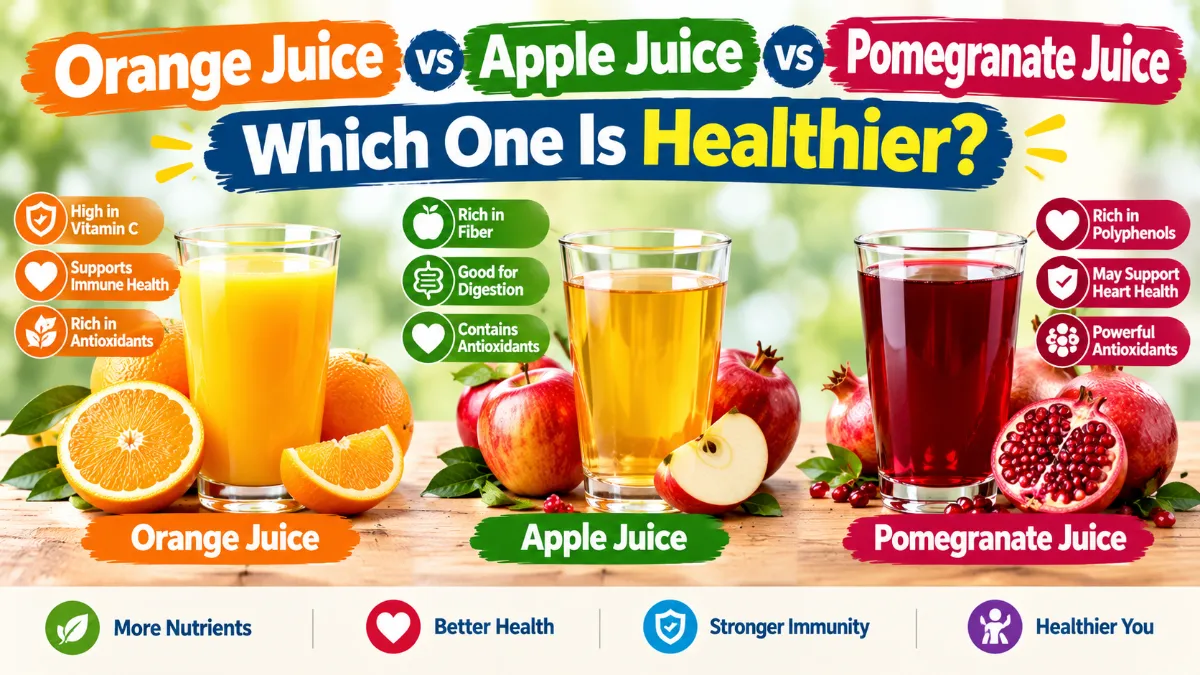
Orange Juice vs Apple Juice vs Pomegranate Juice : Choosing between orange juice, apple juice, and pomegranate juice can be confusing. All three offer different nutrients, flavors, and potential health benefits. However, their nutritional value varies depending on how they are prepared, whether they contain added sugar, and how much you drink.
Orange juice is well known for its vitamin C content, apple juice provides natural carbohydrates and some plant compounds, while pomegranate juice is rich in antioxidant compounds called polyphenols. But which juice is the healthiest choice for your daily routine?
Let’s compare their nutritional benefits, potential drawbacks, and the best ways to enjoy them.
1. Orange Juice: Best for Vitamin C
Orange juice is a popular breakfast drink because it provides vitamin C, which supports immune function, collagen production, and iron absorption.
Health Benefits of Orange Juice
- Supports immune health: Vitamin C helps your immune system function normally.
- Promotes healthy skin: Vitamin C plays an essential role in collagen production.
- Helps absorb iron: Drinking vitamin C-rich orange juice with plant-based foods can improve the absorption of non-heme iron.
- Provides essential nutrients: Depending on the product, orange juice may contain folate and potassium. Fortified varieties can also provide calcium and vitamin D.
Potential Drawbacks
Orange juice contains natural sugar and calories, even when no sugar has been added. It also has much less fiber than a whole orange. Drinking large quantities may increase your sugar and calorie intake without providing the same fullness as eating whole fruit.
Best choice: Choose 100% orange juice without added sugar, preferably with pulp if you enjoy it. Keep portions moderate.
2. Apple Juice: A Simple Source of Energy
Apple juice has a mild, sweet flavor that many people enjoy. It provides carbohydrates that the body can use for energy, along with varying amounts of plant compounds depending on how the juice is processed.
Health Benefits of Apple Juice
- Provides quick energy: Its natural carbohydrates can supply energy.
- Contains plant compounds: Apple juice may contain polyphenols, although amounts vary with the apple variety and processing method.
- Offers a refreshing option: Its mild flavor makes it easy to include in a balanced diet.
- Can contribute to fluid intake: Apple juice provides water, although plain water is generally a better everyday hydration choice.
Potential Drawbacks
Apple juice is usually low in fiber because most of the fiber is removed during juicing. It can also contain a considerable amount of natural sugar. Some people, especially those sensitive to fructose, may experience digestive discomfort after drinking it.
Whole apples are generally a better everyday choice because they provide more fiber and tend to be more filling.
Best choice: Choose 100% apple juice without added sugar and enjoy a small serving rather than drinking it throughout the day.
3. Pomegranate Juice: Rich in Antioxidant Compounds
Pomegranate juice has a distinctive sweet-tart flavor and contains polyphenols, including anthocyanins and other compounds that contribute to its deep red color.
Health Benefits of Pomegranate Juice
- Provides polyphenols: These plant compounds have antioxidant activity and help protect cells from oxidative damage in laboratory studies.
- May support cardiovascular health: Some studies suggest pomegranate juice may modestly influence blood pressure, but results vary and more research is needed.
- Contains useful nutrients: Pomegranate juice can provide potassium and other naturally occurring plant compounds.
- Offers a different flavor profile: Its tart taste adds variety to a balanced diet.
Potential Drawbacks
Pomegranate juice can be high in natural sugar and calories. It also contains much less fiber than whole pomegranate seeds. Evidence about its health benefits is still developing, and it should not be considered a treatment for high blood pressure or other medical conditions.
Pomegranate juice may interact with certain medications, so people taking prescription medicines should check with a pharmacist or healthcare professional if they are unsure.
Best choice: Look for 100% pomegranate juice without added sugar and drink a moderate portion.
Orange Juice vs Apple Juice vs Pomegranate Juice
The following table summarizes the main differences. Exact nutritional values depend on the brand, serving size, and processing method.
| Feature | Orange Juice | Apple Juice | Pomegranate Juice |
|---|---|---|---|
| Main nutritional highlight | Vitamin C | Carbohydrates for energy | Polyphenol antioxidants |
| Fiber | Low compared with whole oranges | Usually very low | Usually low |
| Natural sugar | Moderate to high | Moderate to high | Moderate to high |
| Potential benefit | Immune function and iron absorption | Convenient source of energy | Antioxidant intake |
| Best reason to choose it | Vitamin C | Mild flavor and energy | Polyphenol variety |
Which Juice Is Healthier?
There is no single winner for everyone. The healthiest option depends on what nutrients you want and how the juice fits into your overall diet.
Choose Orange Juice If:
You want a convenient source of vitamin C. It can be particularly useful alongside meals containing beans, lentils, leafy greens, or other plant-based iron sources.
Choose Apple Juice If:
You prefer a mild, sweet drink. However, if you want more fiber and better fullness, eating a whole apple is usually a better choice.
Choose Pomegranate Juice If:
You want to add a variety of plant polyphenols to your diet. It can be part of a heart-conscious eating pattern, but it should not replace prescribed medication or other recommended treatments.
Overall recommendation: For vitamin C, orange juice is usually the strongest option. For antioxidant variety, pomegranate juice is an appealing choice. Apple juice can also fit into a balanced diet, although whole apples generally offer more fiber.
Is Whole Fruit Better Than Fruit Juice?
In most cases, yes. Whole fruits contain fiber that is reduced or removed during juicing. Fiber supports digestive health and can help you feel full for longer. Eating whole fruit also generally takes more time than drinking its juice, which may help you manage portion sizes.
Consider these simple swaps:
- Eat a whole orange instead of drinking a large glass of orange juice.
- Choose a fresh apple for a fiber-rich snack.
- Eat pomegranate seeds when available, rather than relying exclusively on pomegranate juice.
You can still enjoy juice, but it is best treated as one part of your diet rather than a replacement for whole fruits and vegetables.
How Much Fruit Juice Should You Drink?
Portion size matters because juice can deliver natural sugar and calories quickly.
Follow these practical tips:
- Choose 100% fruit juice without added sugar.
- Keep servings modest; around 4–6 fluid ounces (120–180 mL) is a practical portion for many adults.
- Drink juice with a meal rather than sipping it throughout the day.
- Prefer whole fruit most of the time.
- Check the nutrition label for added sugars and serving size.
People with diabetes or other conditions that require carbohydrate management may need individualized portion guidance from a healthcare professional.
Frequently Asked Questions
1. Is orange juice healthier than apple juice?
Orange juice generally provides more vitamin C. Apple juice provides carbohydrates and some plant compounds but is usually low in fiber. Neither automatically makes a healthier choice for every person.
2. Is pomegranate juice good for heart health?
Pomegranate juice contains polyphenols, and some research suggests it may have modest effects on blood pressure. However, the evidence is not conclusive enough to use it as a treatment for heart disease or high blood pressure.
3. Which juice has the least sugar?
The amount varies by brand and serving size. All three can contain substantial natural sugar. Compare the nutrition labels instead of assuming that one type always contains less.
4. Can I drink fruit juice every day?
Many adults can include a small serving of 100% fruit juice in a balanced diet. However, whole fruit is generally preferable because it provides more fiber and tends to be more filling.
5. Is juice better than soda?
Unsweetened 100% fruit juice provides vitamins or plant compounds that most sodas do not. However, fruit juice can still contain considerable sugar and calories, so portion size matters.
Final Thoughts
Orange juice, apple juice, and pomegranate juice each have different nutritional strengths. Orange juice stands out for vitamin C, apple juice offers convenient energy, and pomegranate juice supplies a range of antioxidant plant compounds.
For most people, the best strategy is to prioritize whole fruits, choose unsweetened 100% juice when desired, and keep servings moderate. Rather than relying on one juice as a health solution, focus on a varied diet with vegetables, whole fruits, whole grains, protein-rich foods, and water.
The bottom line: Orange juice may be the better choice for vitamin C, pomegranate juice for polyphenol variety, and whole fruit is usually the best everyday option for fiber and fullness.
Read More