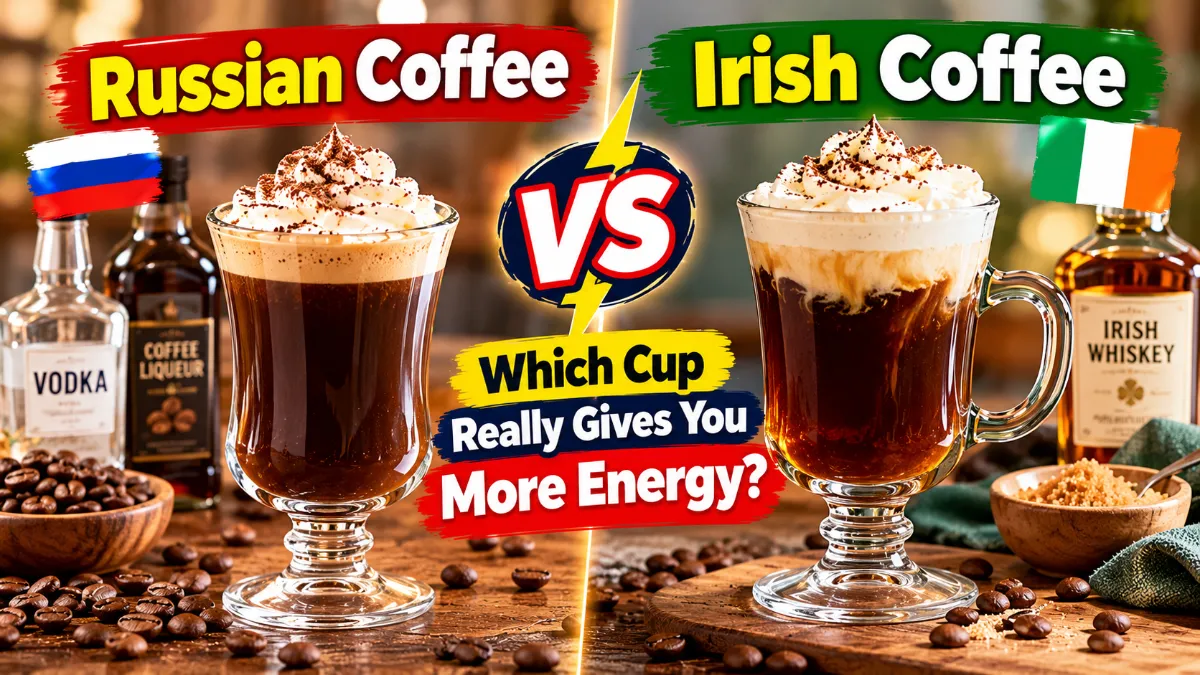
Russian Coffee vs Irish Coffee : Coffee is often associated with better focus, increased alertness, and a quick morning boost. But what happens when coffee is combined with alcohol? Russian coffee and Irish coffee are two popular coffee cocktails with different ingredients, flavors, and effects.
Russian coffee is commonly associated with vodka and coffee liqueur, while traditional Irish coffee combines hot brewed coffee, Irish whiskey, sugar, and cream. Although both drinks can feel warming and satisfying, neither is an ideal choice when your goal is sustained energy or better concentration.
So, which drink contains more caffeine? Which has more calories? And can either one genuinely help you feel more energetic?
Let’s compare their ingredients, caffeine content, nutritional differences, and effects on the body.
What Is Russian Coffee?
Russian coffee is a name used for different coffee-based alcoholic drinks. One common variation combines vodka with coffee liqueur, sometimes with brewed coffee or cream added. Recipes vary by bar and region, so it is worth checking exactly what goes into your drink.
Common Ingredients
Depending on the recipe, Russian coffee may contain:
- Vodka
- Coffee liqueur
- Brewed coffee or espresso
- Cream or milk, in some variations
- Sugar or another sweetener, depending on the liqueur
Does Russian Coffee Provide Energy?
The answer depends largely on its coffee ingredients.
Coffee liqueur contains some caffeine, but the amount varies by brand. If the recipe includes brewed coffee or espresso, it may provide considerably more caffeine.
Vodka does not provide caffeine. Although alcohol supplies calories, those calories do not make alcohol a reliable source of physical or mental energy.
Potential advantage: A Russian coffee made with a substantial serving of brewed coffee may provide a noticeable caffeine boost.
Potential drawback: Alcohol can impair judgment, coordination, and reaction time. Feeling more awake after consuming caffeine does not mean you are less impaired by alcohol.
What Is Irish Coffee?
Irish coffee is a traditional cocktail made with hot brewed coffee, Irish whiskey, sugar, and a layer of lightly whipped cream. It is known for its combination of bitter coffee, warming whiskey, sweetness, and smooth cream.
Common Ingredients
A traditional Irish coffee generally contains:
- Hot brewed coffee
- Irish whiskey
- Sugar, often brown sugar
- Lightly whipped cream
The coffee provides the caffeine, while the whiskey contributes alcohol. Sugar adds sweetness, and cream makes the drink richer.
Does Irish Coffee Provide Energy?
Irish coffee can increase alertness because it contains brewed coffee. However, its caffeine content depends on the amount and strength of the coffee used.
A stronger coffee base generally supplies more caffeine than a weaker one. The whiskey does not increase the drink’s caffeine content, and the cream and sugar do not provide the same alertness effects as caffeine.
Potential advantage: Irish coffee made with a full serving of brewed coffee can provide a meaningful amount of caffeine.
Potential drawback: The combination of alcohol, sugar, and cream can make it a calorie-rich drink. Alcohol may also disrupt sleep, which can leave you feeling less energetic later.
Russian Coffee vs Irish Coffee: Key Differences
| Feature | Russian Coffee | Irish Coffee |
|---|---|---|
| Common alcohol | Vodka | Irish whiskey |
| Coffee component | Often coffee liqueur; brewed coffee varies | Usually hot brewed coffee |
| Caffeine | Depends on the liqueur and coffee added | Depends on the brewed coffee |
| Sweetness | Often comes from coffee liqueur | Usually comes from added sugar |
| Cream | Optional in many variations | Traditional recipes include cream |
| Calories | Vary by alcohol, liqueur, and additions | Vary by whiskey, sugar, coffee, and cream |
| Energy effects | Caffeine may increase alertness if present in sufficient amounts | Caffeine may increase alertness |
| Alcohol-related impairment | Yes | Yes |
There is no universal caffeine winner. The specific recipe and serving size matter more than the drink’s name.
Which Coffee Has More Caffeine?
Caffeine comes from coffee and coffee-derived ingredients, not from vodka or whiskey.
Irish coffee usually contains brewed coffee, so its caffeine level depends on the quantity and strength of that coffee. Russian coffee made primarily with vodka and coffee liqueur may contain less caffeine, although adding brewed coffee or espresso can change the comparison substantially.
For context, caffeine levels in ordinary coffee vary widely. Australian health information lists approximately 80 milligrams of caffeine for a teaspoon of instant coffee and around 145 milligrams for a 50-milliliter espresso. These are general examples, not fixed values for either cocktail. <Cite refs={[“turn255558search0”]}/>
To compare two specific drinks, check:
- The amount of brewed coffee or espresso used.
- Whether the Russian coffee includes coffee liqueur or actual brewed coffee.
- The brand and serving size of the coffee liqueur.
- Whether the drinks use regular or decaffeinated coffee.
Bottom line: Irish coffee may provide more caffeine than a Russian coffee made mainly with vodka and coffee liqueur, but a Russian coffee containing strong brewed coffee could provide just as much or more.
Which Drink Has More Calories?
Neither drink has a fixed calorie count. Alcohol, cream, and sweetened liqueurs can all contribute substantial calories.
Russian Coffee
Calories may come from vodka, coffee liqueur, and optional cream or sweeteners. Coffee liqueurs often contain sugar, so the amount used can significantly affect the final total.
Irish Coffee
Calories mainly come from Irish whiskey, cream, and added sugar. A generous layer of cream or extra sugar can make the drink more calorie-dense.
For a meaningful comparison, look at the actual recipe rather than assuming that one drink is always lighter. Using less added sugar or cream may reduce calories, but it does not eliminate the effects of alcohol.
Can Alcohol and Caffeine Give You More Energy?
Caffeine is a stimulant that can temporarily increase alertness. Alcohol, by contrast, can impair attention, judgment, coordination, and reaction time.
Combining the two can create a misleading feeling of wakefulness. You may feel more alert without being less intoxicated, and caffeine does not make it safe to drive after drinking.
Neither Russian coffee nor Irish coffee should be used to fight fatigue before driving, operating machinery, or performing tasks that require quick reactions.
If you want an energy boost without alcohol, regular coffee, tea, or another nonalcoholic drink is a better option.
Which Is Better for Focus and Productivity?
If your main goal is to concentrate, neither alcoholic coffee cocktail is a good choice.
For Morning Alertness
Choose regular brewed coffee or tea. These provide caffeine without adding alcohol, making it easier to assess how the caffeine affects you.
For Studying or Working
Try drinking water, eating a balanced meal, and taking short movement breaks. Adequate sleep remains essential for attention and memory.
For an After-Dinner Drink
Russian coffee and Irish coffee may appeal to people who enjoy coffee cocktails, but both contain alcohol in their conventional forms. Keep in mind that alcohol can interfere with sleep quality, even if it initially makes you feel relaxed.
If you want the coffee flavor without alcohol, prepare a nonalcoholic version using brewed coffee, milk or cream if desired, and a modest amount of sweetener.
Are Russian Coffee and Irish Coffee Healthy?
Neither cocktail should be considered a health drink or a reliable way to increase energy.
Coffee contains caffeine and naturally occurring compounds, but adding alcohol does not turn it into a healthier beverage. Cream and sugar can increase the calorie content, while alcohol introduces additional health and safety considerations.
For most adults who tolerate caffeine, moderate consumption of ordinary coffee can fit into a balanced diet. Individual tolerance varies, and people who are pregnant, sensitive to caffeine, or managing certain health conditions may need to limit their intake.
If you drink alcohol, follow local guidance on lower-risk drinking. Avoid alcohol entirely when driving, during pregnancy, or when a medication or medical condition makes drinking unsafe.
Frequently Asked Questions
1. Is Russian coffee stronger than Irish coffee?
It depends on the recipe. A Russian coffee made with espresso may be high in caffeine, while one made mainly with coffee liqueur may contain less. Irish coffee’s strength depends on the brewed coffee used.
2. Does Irish coffee contain more caffeine?
Not always. Traditional Irish coffee contains brewed coffee, but the caffeine content depends on serving size and preparation. A Russian coffee made with espresso could contain more caffeine.
3. Does vodka give you energy?
Vodka does not contain caffeine. Alcohol supplies calories, but it is not a reliable way to improve alertness, concentration, or physical performance.
4. Can coffee cancel out the effects of alcohol?
No. Caffeine may make you feel more awake, but it does not reverse alcohol-related impairment or make driving safe.
5. Which is better for an energy boost?
Regular coffee or tea without alcohol is a better option when your goal is alertness. The effect depends on caffeine dose, personal tolerance, and sleep quality.
6. Can I drink Russian coffee or Irish coffee before bed?
It is generally better to avoid caffeinated alcoholic drinks close to bedtime. Caffeine may delay sleep, while alcohol can disrupt sleep quality.
Final Verdict: Russian Coffee vs Irish Coffee
Russian coffee and Irish coffee differ in their ingredients, flavors, and typical preparation methods. Irish coffee usually contains brewed coffee, Irish whiskey, sugar, and cream. Russian coffee often combines vodka with coffee liqueur, although recipes vary.
When it comes to caffeine, neither drink automatically wins. The amount and strength of the coffee are the deciding factors. Calories also depend on the alcohol, liqueur, cream, and sugar used.
The healthiest choice for energy and focus is regular coffee or tea without alcohol. If you enjoy either cocktail, treat it as an alcoholic drink to enjoy responsibly—not as a solution for tiredness or low energy.
Read More